



The Change Nobody Explains: Perimenopause, Menopause and Feeling Like Yourself Again
What happens to your body and mood in perimenopause and menopause, what helps, what women need most, and how to talk to your partner about it.
By Janice F. · 5 min read
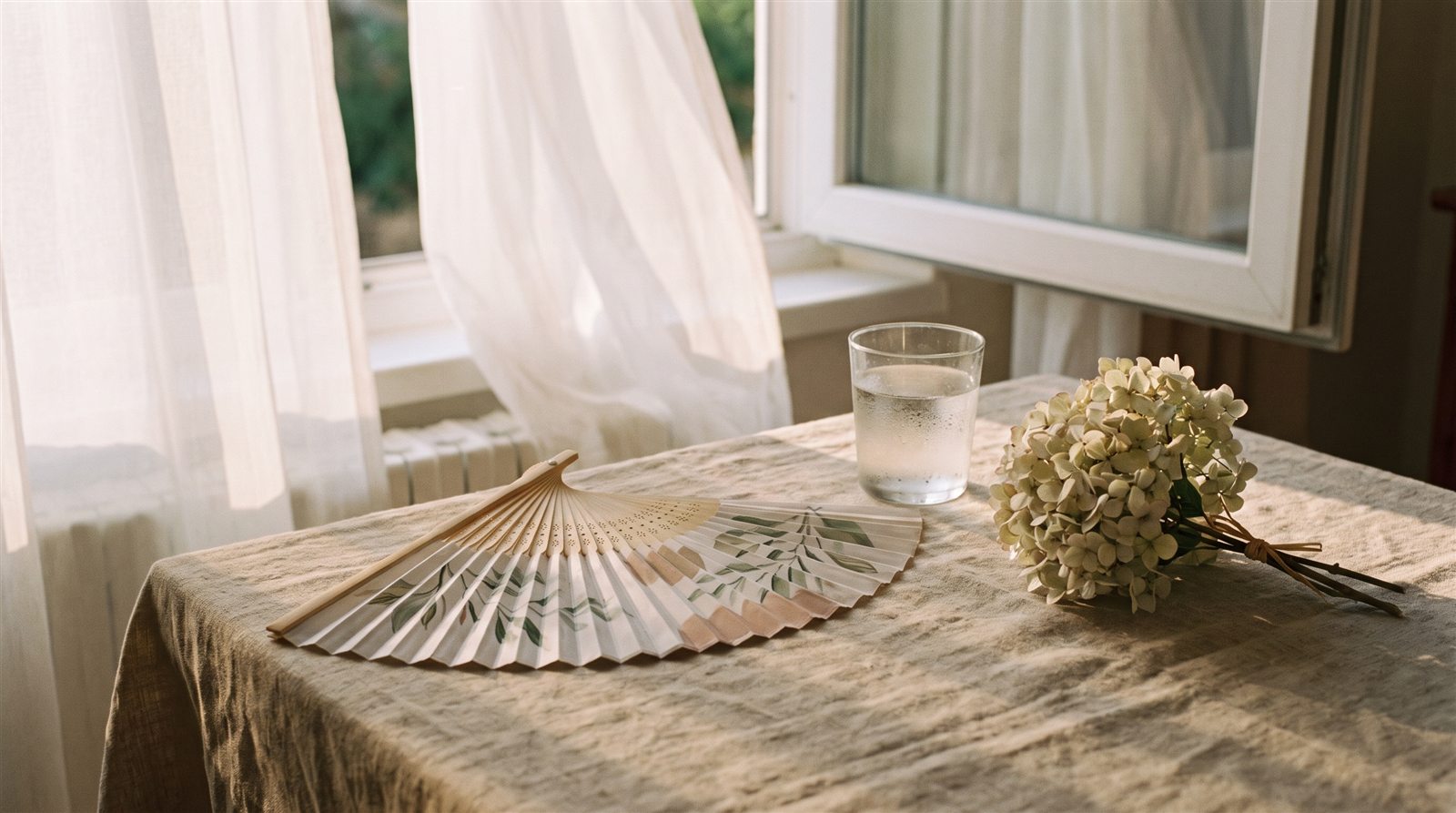
Come in. Sit down. I'll put the kettle on.
You said on the phone that you haven't been yourself lately, and that you didn't want to make a fuss. So let's not make a fuss. Let's just talk, the way women have always talked about the things nobody explained to us.
"I think I'm going crazy."
You're not. You're waking up drenched at 3 a.m. You lose words halfway through a sentence. You snapped at your family over nothing and then cried in the bathroom. Your body feels like a house where someone has moved all the furniture.
That sounds a lot like perimenopause, the years before your periods stop for good. Menopause itself usually arrives somewhere between 45 and 55, though it can come earlier [1][2]. The change is slow. Symptoms usually last 7 to 9 years, sometimes longer, and they can shift along the way [3].
Nobody prepares us for this the way they prepared us for our first period. So we prepare each other.
"But it's not just hot flushes, is it?"
No. That's the part nobody mentions. The WHO says these hormone changes can affect your physical, emotional, mental and social wellbeing [2]. The common ones are [2][3]:
- hot flushes and night sweats
- trouble sleeping
- mood swings, low mood, anxiety or irritability
- brain fog, forgetfulness, trouble concentrating
- headaches or migraines that are worse than usual
- weight gain
- vaginal dryness, discomfort during sex, and urinary infections
- a lower sex drive
You might have three of these, or all of them, or they might come and go like weather.
"Is it worth seeing a doctor, or should I just push through?"
Please don't just push through. The WHO says symptoms that affect your health and wellbeing should be talked through with a health provider [2], and the NHS suggests seeing a doctor if you think you have symptoms and want to know your options [3].
There's a quieter reason too. After menopause, bone density drops, which raises the risk of osteoporosis and fractures, and the lower heart-disease risk women have compared with men gradually fades [2]. Your doctor can help you protect yourself for the years ahead.
And one rule I'd like you to remember: if you have had no period for 12 months or more and then have any bleeding, see a doctor promptly [3].
Go with a list. Write down your symptoms, how often they come, and what they stop you doing. It's surprisingly easy to forget everything once you're sitting in that chair.
"What actually helps?"
More than you'd think. There are hormonal and non-hormonal treatments [2]. The NHS describes [4]:
- HRT, which replaces the hormones that are falling, as tablets, patches, gels or sprays
- vaginal oestrogen, as a cream or pessary, for dryness and soreness
- cognitive behavioural therapy, a talking therapy that can help with hot flushes, night sweats, low mood and anxiety
- some other medicines, including certain antidepressants, for flushes or mood
Be careful with the herbal remedies your cousin swears by. The NHS says ones like red clover and black cohosh have very little evidence that they work or are safe, and they can interact with other medicines [4]. Ask your doctor first.
And the everyday things, which sound small and aren't [5]: regular sleep times, moving your body, especially weight-bearing exercise for your bones, calcium-rich food, less alcohol, no smoking, light layers, a fan by the bed, a cold drink, and fewer of the things that set the flushes off, like spicy food, caffeine and hot drinks. Yes, I see the irony. Let me make your next one decaf.
"How do I tell my partner without it becoming a joke?"
Choose a quiet moment, not the middle of an argument or a hot flush. Then say it plainly.
"I think I'm going through perimenopause. Some of what you've noticed, the bad sleep, the short temper, the forgetting, is part of it."
Tell them how it actually feels: "Some nights I wake up soaked and can't get back to sleep. The next day I'm irritable, and I hate that I'm snapping at you."
Then tell them what helps: "If I get short with you, give me a few minutes instead of arguing." Or: "Could you take the early run this week so I can sleep?"
If intimacy has changed, say that too, gently. Changes in desire or comfort are common and often treatable. Naming them protects closeness instead of letting distance grow quietly.
And if your partner is listening in right now: learn about it. Don't joke about it in front of other people unless she does first. Help her rest. Go with her to the doctor if she wants you there. Remind her she is still herself, even on the days she doesn't feel it.
"Will I ever feel like me again?"
Many women say that on the other side of the hardest part, they found something unexpected: a steadiness, a freedom to say no, a little less need to please everyone. Not every day will be easy. But this is a new season, not an ending.
Finish your tea. Then call and make that appointment. I'll wait.
Sources
- [1] NHS. "Menopause." nhs.uk/conditions/menopause
- [2] World Health Organization. "Menopause" fact sheet. who.int/news-room/fact-sheets/detail/menopause
- [3] NHS. "Symptoms of menopause and perimenopause." nhs.uk/conditions/menopause/symptoms
- [4] NHS. "Treatment for menopause and perimenopause." nhs.uk/conditions/menopause/treatment
- [5] NHS. "Things you can do for menopause and perimenopause." nhs.uk/conditions/menopause/things-you-can-do
This article is for general awareness and reflection. It is not medical advice or a diagnosis. Please talk to your doctor or a qualified health professional about your symptoms and treatment options.
What has changed for you lately that you haven't told anyone yet?
Write as much or as little as you like. It stays private on this device.
Write your own